
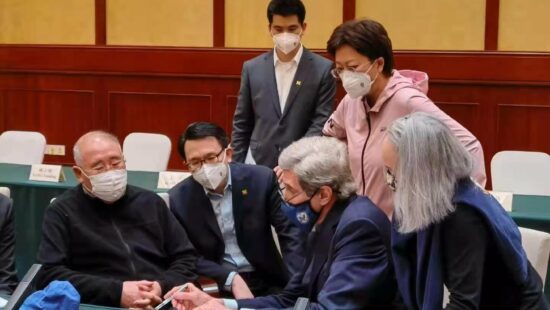
The US and China have found common ground on climate. This is a challenge which transcends politics and has great geopolitical significance. Confronted with an existential and global threat, there is no alternative to collaboration.

John Kerry is deeply convinced of this, as some of his recent statements make clear. We need “a wartime mentality” to save the planet’s climate (June 28, 2021); “Simply, if we don’t cooperate (with China) we are dead” (June 29, 2021). “The time left is very short”, the crisis is “unfolding faster and more violently” than expected. “In World War two and its aftermath, leaders did what they had to do”; even allying with the Soviets. (July 20, 2021).

I had written this much in September, commenting on John Kerry’s successful visit to China, which effectively set the basis for yesterday’s agreement. 

“The US and China seek a common position for COP26 and hope to replicate the model for cooperation, created and tested by John Kerry and Xie Zhenhua themselves, which contributed to the success of Paris. At the foundation of this playbook lies the “US-China Climate Change Working Group” set up in 2013 and which also remained in operation with Trump.” 

And indeed, the breakthrough U.S.-China Joint Glasgow Declaration announces that “The two sides intend to establish a “Working Group on Enhancing Climate Action in the 2020s”. 

This was in my mind the only way forward, as I had mentioned during a web talk with Todd Stern, John Podesta and Mauro Petriccione, organised by Formiche in January this year. 

Compared to 2015, the international situation has clearly deteriorated. Growing geopolitical tensions and the confrontation between the United States and China – according to some – mark the entry into a Cold War. Many in Washington fear that the energy transition will weaken the US to the advantage of Beijing.

The sheer dimension and the innovational capability of the Chinese industrial system arouse  concern. Renewable energy capacity which has been installed in China in 2020 amounts to 33% of the world’s total. Yet, far from being a threat, the rapid development of Chinese renewable capacity has helped to cut costs for the benefit of the rest of the world. Electricity produced by solar is today the cheapest in history (IRENA). Prices of photovoltaic modules have fallen by 89% since 2010. Solar photovoltaic prices are forecast to drop by another 34% by 2030. By 2050, those prices are expected to drop by a total of 63%. This means utility-scale PV will cost only 2.5 cents per kWh. It is now cheaper to build and operate new large-scale wind or solar plants in nearly half the world than it would be to run an existing coal or gas-fired power plant in countries that represent 46% of the world’s population. “The benefits of the transition have never been clearer” (Francesco La Camera).

If there is an increase in energy prices in the short term (this is happening in Europe as we write), mainly due to the rising price of carbon, this is only an adjustment phase. They will decrease over time.

As Kerry noted, the Chinese see a contradiction between our requests to do more on climate while we raise sanctions on Chinese photovoltaic panels manufacturers.

The EU, which aims for a leadership role, sees Beijing as a necessary partner. The two blocs are converging in terms of environmental regulations and industrial standards. Those and pricing carbon are the best guarantee for a “level playing field” for European companies.

Cutting greenhouse gas emissions by half by 2030, as decided by the European Union or announced by President Biden, requires tough measures and a radical transformation of industrial and consumer systems. Changing the energy matrix means changing the structure of our societies and the way we live. It is not an abstract exercise in cutting greenhouse gas emissions.

The ecological transition has entered its hardest phase. After thirty years of incremental adjustments and excruciating delays by politics and industry, the largely still only declared goals of climate neutrality imply a clear departure from past policies.

In the old Italian concession of Tianjin, the old world was dying, while the new struggles to be born. It might have been the time of monsters. Instead, we seem to be ready to fight them back.

Confronted with an existential and global threat, there is no alternative to collaboration.

US-China find common ground on climate existential threat

The US and China have found common ground on climate. This is a challenge which transcends politics and has great geopolitical significance. Confronted with an existential and global threat, there is no alternative to collaboration. John Kerry is deeply convinced of this, as some of his recent statements make clear. We need “a wartime mentality” to save the planet’s climate…

La disfatta dell'Etiopia sarebbe un'esplosione atomica. L'allarme di padre Albanese

Padre Giulio Albanese, comboniano, a lungo missionario in numerosi Paesi africani, è una delle poche bussole per cercare di orientarsi nel disastro del Corno d’Africa. Dalle sue parole sul conflitto si percepisce che un altro rischio si potrebbe affacciare in Etiopia: le infiltrazioni di gruppi jihadisti

Draghi, il Quirinale e il voto anticipato. Parla Toccalini (Lega)

Intervista al segretario della Lega giovani Luca Toccalini. Salvini vs Giorgetti? Non siamo una caserma, ma decide il segretario. In Europa avanti con il supergruppo, Ppe schiacciato a sinistra. Quirinale? Presto per fare nomi anche se Draghi…

Basta un dominio per dominare la rete

Dietro questa scelta, imprenditorialmente brillante e lungimirante, al momento sembra esserci solo una strategia di marketing aziendale e non certo una mandrakata di spin doctoring. Domenico Giordano di Arcadia legge la mossa di Fedez. E di chi ha registrato il dominio elettorale di Chiara Ferragni

Creare l'ecosistema per startup e innovazione. La politica industriale che serve

Formiche.net ha messo pubblico e privato a confronto. Tra numeri, investimenti e troppa burocrazia, il ruolo chiave del MiSE, di Invitalia e del Fondo Nazionale Innovazione. Cosa chiedono gli startupper

Libia, riconoscimento in cambio di appoggio. Il figlio di Haftar cerca Israele

Viaggio in Israele del figlio del generalissimo della Cirenaica per cercare appoggio in vista delle elezioni e non solo. Avrebbe offerto di estendere il riconoscimento ufficiale dello Stato ebraico a funzionari israeliani in cambio del supporto diplomatico e militare al padre. Ecco perché
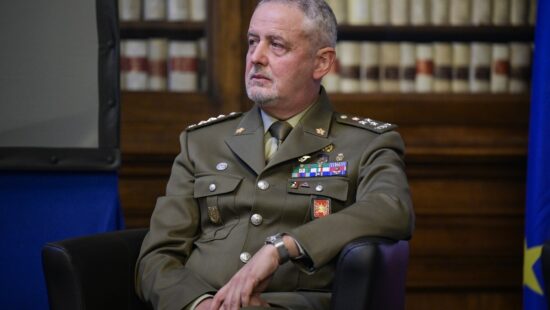
L’Esercito è pronto al futuro. Serino e Mulè presentano il calendario

Pietro Serino, capo di Stato maggiore dell’Esercito, ha presentato oggi il Calendario 2022 della Forza armata, alla presenza del sottosegretario Mulè e del capo di Stato maggiore della Difesa Cavo Dragone. Il tema di quest’anno riguarda “le competenze dell’Esercito per la sicurezza del cittadino”. Per gli scenari operativi, l’attenzione è tutta per il multi-dominio

Il contrasto ai ransomware è ancora una questione di diritto

Si moltiplicano le operazioni internazionali contro gruppi accusati di diffondere ransomware a scopo di estorsione. Ma il modo in cui vengono attuate somiglia più ad azioni paramilitari che ad indagini di polizia. È ancora il diritto lo strumento migliore per proteggere le infrastrutture critiche? L’analisi di Andrea Monti, professore incaricato di Digital Law nel Corso di Digital Marketing dell’Università di Chieti-Pescara
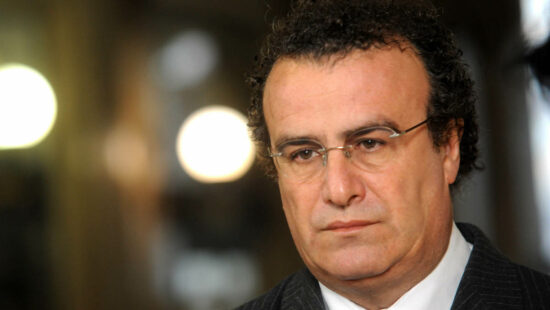
Alla destra serve un po' di sinistra. La versione di Fabio Granata

“Alla destra attuale servirebbe una ‘sinistra’ interna che inchiodi e corregga la linea sulle politiche sociali, sulla politica estera, sulle scelte culturali e sulle battaglie antimafia”. Parla Fabio Granata, già deputato e membro della Direzione nazionale del PdL, vicino alle posizioni di Gianfranco Fini
From Xinjiang with love. Se la propaganda cinese sbarca a Roma

Il governo cinese organizza un convegno sullo Xinjiang, “terra meravigliosa”, con parlamentari italiani del M5S e i presidenti delle Commissioni Esteri di Camera e Senato, Piero Fassino e Vito Petrocelli. Persecuzioni degli Uiguri? Tutto inventato, spiega la propaganda di regime. Fassino: “Chiediamo rispetto dei diritti umani”


×

Iscriviti alla newsletter