

On Sunday (January 12), Iran, the United States, and the European Union announced agreement on a deal to implement the major, perhaps historic, deal to slow the Iranian nuclear program.

It cannot be a terrific sign that it took six weeks to agree on ways to do what the negotiators agreed to do — but the test truly begins now. Within six months, a wider and more binding agreement needs to be reached — or the entire structure of “negotiations over nukes” may fall apart.

Israel’s government remains deeply skeptical of Iran’s willingness to freeze or reverse its nuclear ambitions. (It’s not only a cynic who would point to historical precedents — some of them revealed in our book, Spies Against Armageddon – in which Israel lied, even to the United  States, about Israel’s nuclear weapons project.)

So what will the Israelis do now? Step up the espionage.

The Mossad and other arms of Israeli espionage will be focused on Iran. Israel, even without being a direct party to the P5+1 deal with Iran, is more highly motivated than anyone else to find proof that Iran is cheating.

A unit with the shadowy reputation of being masters of assassination — Kidon (Hebrew for “Bayonet”) — is also masterful at infiltrating enemy countries for dangerous reconnaissance. Kidon operatives will likely be tasked again with missions inside Iran. Here is our portrait of the Kidon unit.

[Adapted from Chapter 22, “Assassins,” in Spies Against Armageddon by Dan Raviv and Yossi Melman]

Whether it is a mini-Mossad within the agency, or even a planet of its own, the fact is that operatives in Kidon (Hebrew for “Bayonet”) are obscured by strict secrecy and further protected by military censorship of the Israeli media. Yet, an accurate window into the structure of Kidon, its modes of operation, and the moods and psyches of its members can be found in the pages of a novel.

The author is Mishka Ben-David, and a thorough dossier describing the Kidon unit is nestled in a seemingly innocent book of fiction he wrote, Duet in Beirut, published in Hebrew in 2002. Ben-David, though, is not just a novelist. He was an intelligence officer. He was in the Mossad. And if that is not real enough, then consider that he was the chief intelligence officer of Caesarea, the agency’s operations department that runs combatants – Jewish and non-Jewish – who penetrate such enemy countries as Syria, Egypt, and Iran.

Caesarea also has, at its service for special occasions, Kidon. This “Bayonet” unit is kept small but sharp, and it recruits men and women who already have proven themselves in their military service or in other intelligence work. They are judged, through a process that includes copious psychological profiling, to have excellent self-discipline. Even more importantly, they have the skills needed for operations that are on the edge. Many of them come from special forces units, such as Sayeret Matkal and Flotilla 13.

They are trained by highly motivated instructors and work in small teams of two or four – each of them known as a khuliya (a Hebrew word for “team” or “connected link”).  Although Kidon’s overall size has never been published, there are several dozen khuliyot, and the entire secretive organization is referred to as “The Team.”

They are so compartmentalized that their office is not inside the Mossad headquarters at the Glilot junction north of Tel Aviv. They hardly ever go there, and even with the very few Mossad operatives with whom they interact, they use assumed names – so as to be anonymous even to them.

In the field, they use a third name, and sometimes even fourth and fifth identities.

Their training includes almost anything one might imagine is needed for a thorough intelligence operation: surveillance, shaking off surveillance, and how to study an object – things, buildings, or even people – and memorize everything about it.

They become proficient at remembering codes and securely communicating during missions without raising suspicion.  On top of conventional communication gear, this can include an agent touching her nose or pulling her earlobe, or some other form of sanitized signal to colleagues.

One of the skills is to remain cool as a cucumber in all circumstances, and not to be shaken by any unexpected interruption, question, or approach by people – never hinting that you are involved in anything unusual.

In Ben-David’s adventure novel, a female Kidon combatant and the senior man who trained her are sent to penetrate a factory in a foreign country that manufactures parts for Iran’s nonconventional weapons. They are interrupted when another Kidon team, serving as their perimeter guard, informs them with urgency that unexpected guests are arriving. The guards disperse, according to plan, and the duo know precisely where to go to meet a car that is waiting there for such an eventuality.  Everyone keeps their cool. Panic is not in their lexicon.

Kidon personnel excel at the manual skills that are often required in the field: picking or breaking a lock, surreptitiously taking photographs, and planting electronic devices. They also learn to master a variety of vehicles: not only cars and vans, but also motorcycles, which have become Kidon’s vehicle of choice – almost a trademark of a team that leaves few traces.

The Team’s members are constantly practicing the use of weapons, and as wide a variety of weapons as has ever been invented.  They are very good at firing pistols, often with silencers, whether while standing, running, driving, or riding a motorcycle. They know how to shape, plant, and detonate explosives, including innovatively designed bombs. They are well practiced at stabbing enemies with knives, injecting them with hypodermic needles, or administering poison by way of newly minted delivery methods. In addition, well trained in martial arts, Kidon operatives are adept at using their own hands and feet as weapons.

[It was a team headed by Kidon that murdered a Hamas senior man in a hotel in Dubai in January 2010. That time, many of them were seen by video security cameras. Some senior Mossad executives admit that was a damaging error, but others pointed out to us that none of the Israelis has been caught or identified — and in the modern hi-tech world, they added, cameras can rarely be avoided entirely.]

The description of their skills may seem torn from a James Bond novel or movie, but they are not figments of a writer’s imagination.  Kidon men and women are authentic intelligence officers who are taught a wide range of crafts. It is a barely concealed fact, within the Mossad, that they are Israel’s assassins.  Moreover, they are considered to be supreme intelligence officers for all seasons – not simply a death squad.

Click here to read more

What is Israel likely to do after the deal to implement the Big Deal? Send its best Mossad spies into Iran

On Sunday (January 12), Iran, the United States, and the European Union announced agreement on a deal to implement the major, perhaps historic, deal to slow the Iranian nuclear program. It cannot be a terrific sign that it took six weeks to agree on ways to do what the negotiators agreed to do — but the test truly begins now.…

Il liberalismo etico di Lord Acton

Qualche giorno fa, il 10 gennaio, è stato l’anniversario della nascita del grande storico inglese John Emerich Edward Dalberg-Acton, meglio conosciuto come Lord Acton, nato a Napoli nel 1834. Lord Acton, brillante intellettuale dell’Inghilterra di fine Ottocento, è noto per la sua imponente e mai conclusa opera sulla storia della libertà. Di quel monumentale progetto editoriale sono giunti fino a…

Chi sbarca in Messico con Letta

Il presidente del Consiglio, Enrico Letta, è arrivato in Messico per una visita ufficiale di tre giorni che ha come finalità quella di approfondire i rapporti bilaterali in materia politica, economica ed energetica. In un comunicato pubblicato sul sito statale Notimex, la segreteria di Rapporti esteri del Messico ha confermato che il viaggio di Letta nel Paese è avvenuto a seguito…
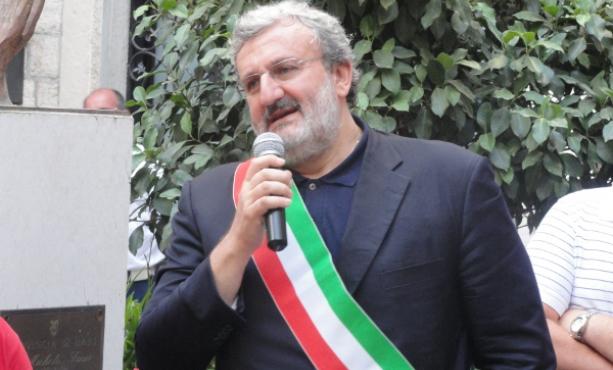
Sindaci, ecco la classifica dei migliori e dei peggiori

I grandi calano, i nuovi avanzano, ma in generale la fotografia dei primi cittadini d'Italia scattata dall'annuale sondaggio IPR Marketing per Il Sole 24 Ore riserva più di una sorpresa. Si appanna complessivamente l’immagine di primi cittadini e presidenti di Regione, ovvero tra gli amministratori locali il primo dato è il consenso che scende tra i big. GUARDA LA PHOTOGALLERY…

Vi spiego perché il Jobs Act non creerà un posto di lavoro

Grazie all’autorizzazione dell’editore e dell’autore, pubblichiamo l’articolo di Marco Cobianchi uscito sul quotidiano Italia Oggi diretto da Pierluigi Magnaschi Ho voluto aspettare di compulsare diligentemente il Job Act di Matteo Renzi (tempi impiegato: 15 minuti) e soppesare i profondi commenti di economisti, sociologi, politici ed esperti vari. Ho voluto attendere che la Camusso chiedesse la solita patrimoniale «redistributiva» per aumentare…

Quel connubio fra euro e monete locali

Sicché pure in Gran Bretagna, che pure ha una moneta sovrana, una banca centrale e una politica monetaria, si sono affermati negli ultimi anni una serie di circuiti di monete locali. Ciò dimostra come l’uso e l’utilità di questi strumenti di pagamento non abbiano nulla a che vedere con la valuta del paese che li ospita. Il fenomeno è diventato…

Idrocarburi, come cambierà la sicurezza delle operazioni off-shore

Riceviamo e volentieri pubblichiamo Il Parlamento italiano è in queste settimane alle prese con il recepimento della Direttiva 2013/30/UE del 12 giugno 2013 in tema di sicurezza delle operazioni in mare nel settore della ricerca e della produzione di idrocarburi. Un tema molto dibattuto sia a livello europeo che nazionale, e spesso nel mirino di ambientalisti e territori interessati dalle…

cyber

Machiavelli e il potere del web

Pubblichiamo il commento di Federico Guiglia uscito su l’Arena di Verona e Brescia Oggi Si sa che ambasciator non porta pena. Ma la valanga di comunicazione che ogni giorno, pardon, ogni secondo la Rete rovescia sul nostro mondo, si sta sempre più caricando di messaggi ben più che penosi. Si tratta di messaggi odiosi, orribili, osceni più tutta la variazione…

Piemonte verso le elezioni: quale sarà il nuovo assetto del potere?

E dunque a Torino, dopo 4 anni di legislatura, hanno finito di contare le schede. In fondo la matematica elettorale esige una giustizia avvezza al calcolo. E si sa che i giuristi, talvolta, con i numeri proprio a loro agio non sono. In compenso hanno il tempismo. E così, dopo che aver contato l’ammontare degli scontrini del governatore leghista, gli…

Vi spiego perché non mi convince il referendum sul Fiscal Compact

Venerdì 10 gennaio gli economisti aderenti all’associazione "Viaggiatori in movimento" (nomina sunt consequentia rerum) si sono riuniti, insieme a giuristi e a personalità della politica, per dichiarare guerra al Fiscal compact…..in nome (sic!) dell’Europa e dell’euro. L’ipotesi esaminata è quella di sottoporre a referendum popolare quel trattato internazionale del 2 marzo 2012, sottoscritto da 25 su 27 Stati dell’Unione (con…


×

Iscriviti alla newsletter