
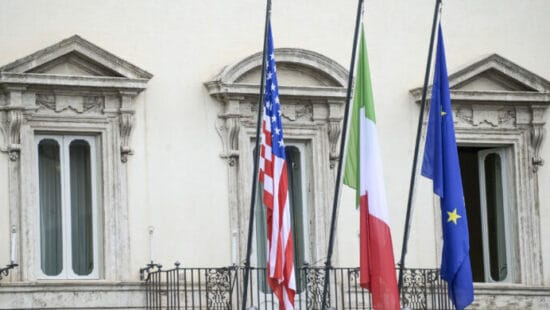
As tradition goes, the recently appointed US Secretary of State Anthony Blinken spent his first week at Foggy Bottom on the phone, touching base with several major allies to the US. On Thursday, the Italian foreign minister Luigi Di Maio was at the receiving end.

The American readout of that call notes that Mr Blinken expressed the desire to “rebuild and strengthen the enduring partnership between the United States and Italy.” The diplomat pointed out that he expected to continue working with Italy – “particularly in its role as President of the G20” – to address “shared challenges” such as Covid-19, climate, China, and Libya.

Over in Rome, Mr Di Maio’s team reported mentions of “excellent bilateral relations, focusing on the key issues of common interest.” The Italian minister remarked that he shared the American willingness to work together on those dossiers, and he “confirmed the desire to cooperate to give new impetus to an effective multilateralism that can provide adequate responses to the major global challenges.”

The Biden administration seems set to renew the US’ deep partnership with the Old Continent. Mr Blinken had spoken with his German and French colleagues on Wednesday, and the following day he also spoke with Josep Borrell, High Representative of the European Union for Foreign Affairs and Security Policy. But, apart from Italy, the Americans did not use the word “rebuild” with anyone else.

As it happens, Italy does have some catch up to do. The US has been cautious with regards to Rome ever since the previous government signed a memorandum of understanding with China in 2019, making Italy the only G7 country to enter the controversial Belt and Road Initiative (BRI).

The Trump administration has been rather hawkish on China, and the new one is likely to hold this line – matter of fact, confronting the “systemic threat” that China is to the US sits at the top of President Joe Biden’s foreign policy agenda.

But the BRI isn’t the only reason for Italy falling short in the eyes of Washington. In recent years, Italy has displayed the tendency to avoid assertive foreign policy stances, preferring the road of “non-interference” instead. This translated quite quickly to Rome’s loss of relevance in the international scenario, especially in the highly strategic Mediterranean area.

The same cannot be said, for instance, of the extremely active country that is France. And although the US and France have their manifested differences (President Emmanuel Macron’s dream of “strategic [European] autonomy” versus stronger NATO integration), Mr Blinken’s chat with his French counterpart Jean-Yves Le Drian had an uplifting ring to it.

It makes sense for the US to deal with what they rightfully perceive to be the real European power brokers, i.e. France, Germany, and the European Commission (led by former German defence minister, Ursula von der Leyen). Before Brexit, the Rome-London axis helped in counterbalancing the Franco-German traction. Today, with the UK out, Spain showing little interest, and Italy looking from the side-lines, there are no other major players to talk to.

Of course, second-fiddle Italy is still a valuable asset for the US. The defence ties, for instance, are peachy. General Vincenzo Camporini, former Italian Defence Chief of Staff, noted that the new head of the Pentagon, Lloyd Austin, wasted no time in calling the Italian defence minister, Lorenzo Guerini.

This signals the importance that Washington still places on Italy, argued the general, mostly due to the country’s positioning in the Mediterranean. There are several active NATO bases inhabited by the Americans in the Italian peninsula and the Italian fleet is “the most modern and efficient” in that basin. However, “it’s not enough to have the abilities, you need the political will to use them.”

For instance, Turkey’s hawkish assertiveness in the East Med and Libya is in Mr Biden’s crosshairs; but, as the general put it, “if I were American, I’d like to focus on the main problem: China. And I wouldn’t want troubles on other fronts, like the Mediterranean or Russia.”

There lies the case for improving the distribution of defence responsibilities between Europe and the US – if only all European countries were of that same mind.

Still, Italy has a trump card: its chairmanship of the G20 (which Mr Blinken’s readout did not fail to mention) and its joint presidentship of the COP26 climate conference with the UK. The Secretary’s talks with European allies were tailored to the target country, but all pointed out the need to collaborate on climate. And Italy is in a prime position to do just that – if only because all countries are essentially starting from scratch when it comes to the green transition, aside from its dominant position in 2021’s international forums.

Perhaps more importantly, though, the climate issue is also front and centre in the European Commission’s long-term strategy. The US re-joining the Paris accords signals Mr Biden’s will to walk along the same path. And Rome – the biggest beneficiary of the EU’s “Next Generation” funds – has the chance to show how the European goals can become reality, a position that in turn reinforces Italy’s strength within the EU, and, by extension, in the Transatlantic alliance.

Italy’s ticket to some newfound degree of international relevance is its chance to shape the immensely consequential climate debate. That way is paved with all that is tied to the fight against the climate crisis – best practices and collaboration, policies (intended as the building blocks of sustainability and circular economy), technology and innovation, and the responsible repurposing of fossil-fuelled industries.

Just like foreign policy stance, this is an opportunity-responsibility that must be actively grasped. Here’s to hoping that Rome – government crisis aside –will be able to do just that.

Why the Italy-US bond goes through Brussels

As newly elected US officials made contact with their counterparts around the world, we had the chance to examine the health of the bond between Italy and the US. Good news for defence, work to be done on the rest – but there are a few silver (or rather, green) linings

Come cavalcare la trasformazione del business, reinventando i mercati

Di Stefania Radoccia

Domani nuovo appuntamento di Task Force Italia che ospiterà il presidente del Fondo italiano d’investimento, Andrea Montanino. I temi del dibattito anticipati a Formiche.net da Stefania Radoccia, Ey Mediterranean managing partner, Markets & accounts componente della Task Force che interverrà sull’argomento del rilancio dei mercati di capitali e gli investimenti in capitale di rischio di piccole e medie imprese

Crisi in Etiopia, prima gli aiuti umanitari. L'appello della viceministra Del Re

La viceministra degli Esteri italiana affronta con Formiche.net uno dei temi attorno a cui si muove la politica estera europea: l’Etiopia e la crisi umanitaria nel Tigray. “Gli etiopici ci percepiscono come amici leali, così come noi percepiamo loro, e per questo ogni messaggio che mandiamo ad Addis viene preso in considerazione con estrema attenzione”
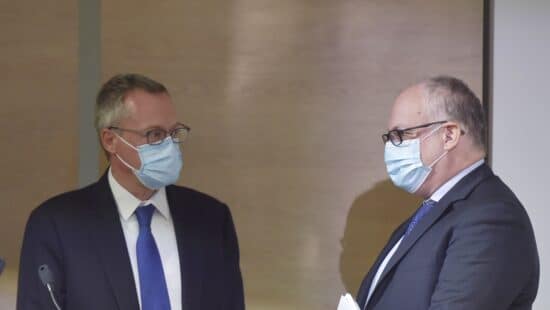
Yellen, ma non solo. Ecco chi tifa per Gualtieri (ancora) al Mef

Ieri la prima telefonata ufficiale tra il ministro dell’Economia e il segretario al Tesoro Usa, Janet Yellen, mentre infuria la battaglia politica intorno a Via XX Settembre. La sintonia c’è, ma l’ex europarlamentare può contare anche sul sostegno di Confindustria e dell’Europa. E, forse, dei mercati

 

Cashback e ristori per, me pari non son!

L’ultima, in ordine di tempo, l’emendamento in arrivo in Commissione Bilancio a firma di Italia Viva: l’idea è spostare i 4,7 miliardi dal cashback ai rimborsi per le attività chiuse a causa del Covid-19 Nonostante qualche intoppo iniziale sulla registrazione delle carte e sulla contabilizzazione dei pagamenti, il cashback di Stato sembra essere ormai entrato a regime. Superata la fase…
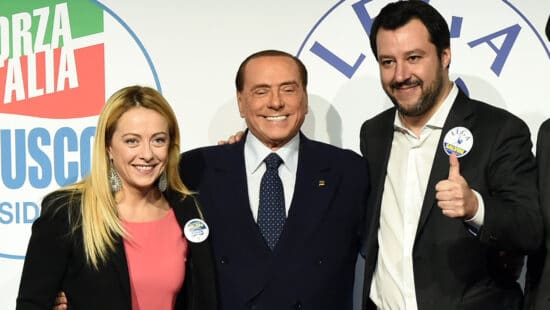
Il centrodestra vuole davvero governare? Le occasioni perdute secondo Zacchera

Di Marco Zacchera

È tempo di una profonda riflessione per tutta l’opposizione che rischia di sprecare un momento-chiave, ritrovandosi alla fine a contare poco o nulla, e a perdere due partite cruciali: il Quirinale e le elezioni. Il commento di Marco Zacchera

Short squeeze & call. Come fare soldi, e tanti, rispettando le leggi

Dopo GameStop, sui social stanno già circolando le liste delle prossime operazioni come fossero un carosello di possibilità. Anche di aziende quotate sui mercati europei. Silvia Castagna, esperta di analisi sociale e comunicazione, racconta il caso finanziario più pazzo del decennio

vaccino covid-19

La Vera storia dei vaccini (o come la vedo io). Scrive Pennisi

Ritardi nelle consegne del vaccino in Europa e in Italia. Confusione su dosi, fiale e siringhe ma anche mancanza di un calendario per le vaccinazioni rivolto al cittadino. Tutte le questioni aperte che in questo momento riguardano i vaccini sotto la lente del prof. Giuseppe Pennisi

A Difesa dell'Europa. Video in diretta

Claudio Graziano, Federica Mogherini, Rolando Mosca Moschini, Romano Prodi e Alessandro Profumo. Sono loro i protagonisti del live talk organizzato dalle riviste Formiche e Airpress “A Difesa dell’Europa, i vent’anni del Comitato militare dell’Ue”. La diretta martedì 2 febbraio alle 17:30

Enrico Vanin: il vero sognatore non ha paura di fallire

Spesso si definisce un’organizzazione o un’azienda innovativa solo perché opera in settori nuovi, o considerati tali dai media. Ma è un errore perché anche in tanti settori ‘tradizionali’ ci sono aziende e organizzazioni che fanno innovazioni di processo, di prodotto o dell’offerta. E dietro a tutte queste innovazioni, ci sono donne e uomini che amano il proprio lavoro. Persone che…


×

Iscriviti alla newsletter