
“I am today launching a small Twitter initiative, the Campaign Against Italy Nonsense (#CAIN). I’ll be tweeting data and arguments for countering myths about Italy’s state and economy.” With this tweet Philipp Heimberger, an Austrian economist at the Vienna Institute for International Economic Studies, set out on his multilingual mission to challenge the European bias against Italy.

Aside from his clear, data-driven analysis, Mr Heimberger’s campaign is newsworthy because of the sheer scarcity of Europeans holding similar views. As the common narrative has it, Italy weighs down and endangers the rest of the Eurozone by means of fiscal irresponsibility (i.e. high public debt), low appetite for structural, efficient reforms, and a dash of stereotypical “laziness.”

These views are held in some of the most vocal Eurozone countries, as the economist underscored. Were it not for Germany’s intervention, last summer’s battle over the EU’s recovery funds would have tilted towards the rigorous moderation championed by the “Frugal Four”: Austria, Denmark, the Netherlands and Sweden.

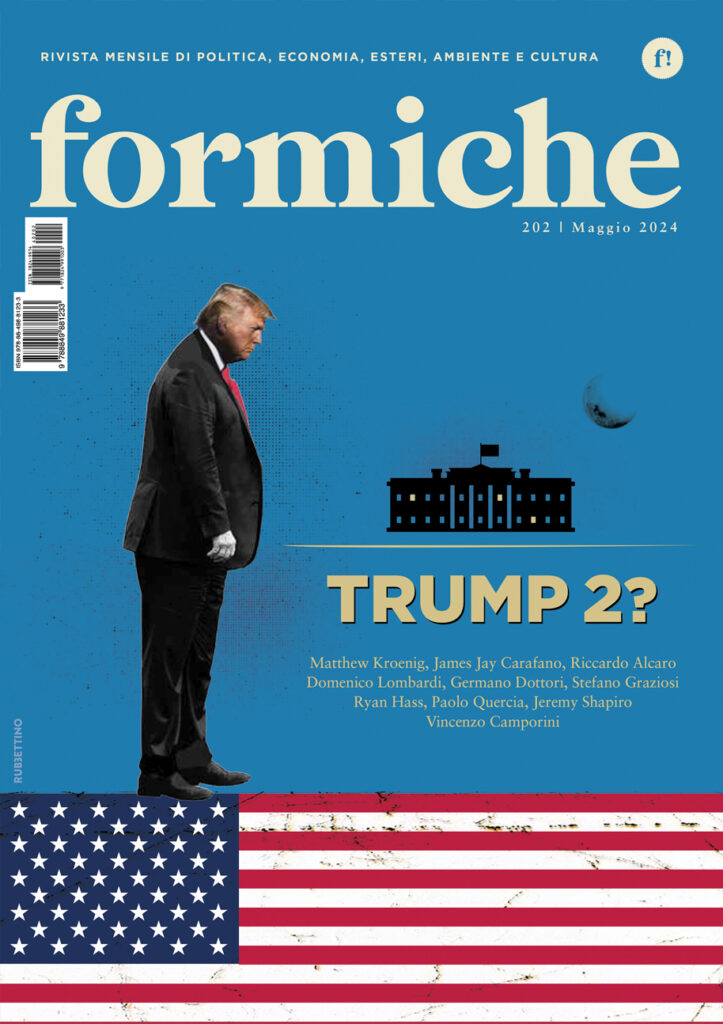
The Dutch magazine Elsevier Weekblad’s controversial cover from summer 2020. The title reads: “Not another penny to Southern Europe!”

Those countries initially resisted a joint recovery effort, because they were uncomfortable with lending their credibility to issue European common debt to be enjoyed by “big spender” countries. Thereafter, they fought to reduce the funds and increase checks and conditions. Conceivably, the Frugal Four partially based their reasoning on Italy’s reputation as a failing economy, as the Southern European country was to be the biggest beneficiary of European funds.

But those prejudices – which are also shared by many Italians – are awfully out of touch with reality. Here are some data-founded truths out of the Austrian’s myth-debunking threads: Italy has been a net contributor to the EU for the past decades, it has undergone more fiscal consolidation that any other European country, it’s an industrial behemoth, it produces more than it consumes (i.e. it does not “live above its means”) and its private debt is actually much lower than other OECD countries.

“My impression is that in this country of 60 million people, the stagnation of the last 20 years has been a breeding ground for fatalism rather than optimism,” Mr Heimberger told Formiche.net; “[a]ll the more reason for media and politicians in Germany, Austria and beyond to refrain from treating Italy like a southern European patient who is having problems because he refuses the reform medicine of the northern European doctor. This is just flawed and counterproductive, the data clearly reject this narrative.”

The economist is well aware of Italy’s structural problems, which encompass the oversized banking sector, the public administration, bureaucracy and the North/South divide – but “what country doesn’t [have any]?” The crux lies in the fact that Italy’s fragility – or its strength – translates directly to fragility, or strength, of the entire European system.

“Italy is the third-largest Eurozone economy, its banking sector is huge, and the country is systematically important in the Eurozone and in the EU. The stagnation of the Italian economy over the last 20 years is a real problem. If economic and political developments in Italy turn out negatively, this would be a potentially fatal blow to the European integration project,” Mr Heimberger told us.

He also mentioned that many users shared his feeling that something had to be done to reduce this perceptive distortion. Some of them had even translated his tweets into Dutch, he recounted, to make them available in the Netherlands. But a minority pushed back, rejecting his narrative.

“We need to look at the facts, evaluate economic policy honestly and do better. This is my view, and I hope that my small Twitter initiative is seen both as a gesture of solidarity towards the Italian population and as a wake-up call to European political leaders.”

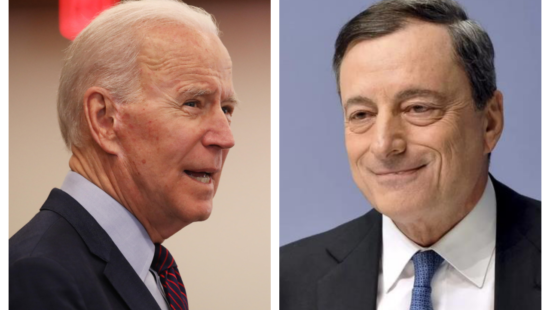
His latest tweets coincide with the birth of Italy’s new government. steered by the former head of the European Central Bank Mario Draghi. The economist believes that Mr Draghi, who is tasked (and trusted) with overhauling the Italian economy, could well be the beginning of a “New Southern European Policy.” One based in evidence and shared value, and not the opposite.


Cover picture credit: EW Magazine, May 2020 – https://www.ewmagazine.nl/ 

The Austrian economist tackling anti-Italian bias

In common European narratives, Italy is “Europe’s sick man,” incapable of keeping its books as rationally as the so-called “frugal” countries. But the data tells another story. We got in touch with the Austrian economist behind the Campaign Against Italy Nonsense (#CAIN)

Draghi, l'Europa, la pace. L'ultima intervista di Maria Romana De Gasperi a Formiche

È scomparsa nella notte Maria Romana De Gasperi, figlia primogenita e collaboratrice dello statista. A Formiche.net l’ultima intervista sul governo Draghi, l’Europa, la pace. Il testo e il video del nostro colloquio

Furlan lascia, arriva Sbarra. La staffetta Cisl secondo Sacconi

Un ricambio al vertice del sindacato nel segno della continuità, come nella migliore tradizione della Cisl. Il commento di Maurizio Sacconi, ex ministro del Lavoro

Il futuro del presunto prestanome di Maduro, Alex Saab (c'entra l'Italia)

Entro l’11 marzo il tribunale di Capo Verde dovrà prendere una decisione sull’estradizione dell’imprenditore Alex Saab. La moglie (indagata in Italia per riciclaggio) sarebbe a Mosca. L’intrigo internazionale attorno al regime venezuelano

draghi

La via sostenibile dell'Italia (sulle orme di papa Francesco). Becchetti legge Draghi

Non conta quanti beni e posti di lavoro produciamo, conta “come” li produciamo e la loro qualità. Per uno sviluppo sostenibile e ricco di senso ciò che conta sono buoni posti di lavoro e una creazione di valore economico compatibile con i vincoli naturali del pianeta. Il commento di Leonardo Becchetti

Politica estera, Draghi: "Questo governo sarà convintamente europeista e atlantista"

Politica estera, Draghi: "Questo governo sarà convintamente europeista e atlantista" [embedyt] https://www.youtube.com/watch?v=7l54yDM1_vc[/embedyt] Milano, 17 feb. (askanews) - "Questo governo sarà convintamente europeista e atlantista, in linea con gli ancoraggi storici dell'Italia: Unione europea, Alleanza Atlantica, Nazioni Unite. Ancoraggi che abbiamo scelto fin dal dopoguerra, in un percorso che ha portato benessere, sicurezza e prestigio internazionale. Profonda è la nostra vocazione…

Sanità, Draghi nel suo programma si ispira al modello Veneto

Livelli essenziali di assistenza, medicina territoriale, telemedicina, accelerazione delle campagne vaccinali e casa come primo luogo di cura. Parte da qui la riforma della sanità secondo il nuovo presidente del Consiglio Mario Draghi, che sembra ispirarsi al modello sanitario veneto

Un economista austriaco combatte il mito della decadenza italiana

Nel sentir comune europeo, l’Italia è il “malato d’Europa”, incapace di fare i conti con la stessa razionalità dei Paesi cosiddetti “frugali”. Ma i dati raccontano un’altra storia. Abbiamo contattato Philipp Heimberger, l’economista austriaco che ha creato la “Campagna contro le sciocchezze sull’Italia”

Senza riforme niente Pil. Le analisi di Montanino sul Recovery Plan

Non basta spendere bene e tutti i fondi previsti dalla dotazione riservata all’Italia, servono riforme che accompagnino ogni investimento. Il report del centro studi Cassa Depositi e Prestiti che va di pari passo con la visione di Mario Draghi


Draghi cita Cavour: "Le riforme compiute a tempo rafforzano l'autorità". Il video

Draghi cita Cavour: "Le riforme compiute a tempo rafforzano l'autorità" [embedyt] https://www.youtube.com/watch?v=S5mWWKAjBzk[/embedyt] Roma, 17 feb. (askanews) - "Il primo pensiero che vorrei condividere, nel chiedere la vostra fiducia, riguarda la nostra responsabilità nazionale. Il principale dovere cui siamo chiamati, tutti, io per primo come presidente del Consiglio, è di combattere con ogni mezzo la pandemia e di salvaguardare le vite…

×

Iscriviti alla newsletter