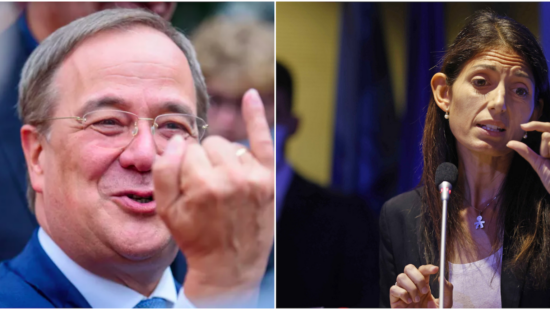
Due importanti eventi scandiscono il ritmo della politica europea in autunno: elezioni federali tedesche il 26 settembre, elezioni comunali in diverse città italiane il 3-4 ottobre. In preparazione all’appuntamento con gli elettori, i candidati incrociano le sciabole in confronti elettorali pubblici, moderati da giornalisti super partes. Un confronto tra un triello tedesco ed un duello romano.
TRIELLO TRA LASCHET (CDU), SCHOLZ (SPD) E BAERBOCK (VERDI)
Laschet va male nei sondaggi ed è quindi costretto ad adottare una tattica più offensiva per recuperare terreno e sventare la possibilità numerica di una coalizione rosso /verde o addirittura rosso /rosso /verde. Scholz e Baerbock, al contrario, possono permettersi di appoggiarsi al moto inerziale dei sondaggi, guadagnando punti simpatia. Ecco i temi principali in discussione.
EUROPA. Tutti e 3 si dichiarano europeisti ed atlantisti convinti. Laschet esclude qualsiasi coalizione di governo con Afd e Linke, che europeisti (i primi) ed atlantisti (i secondi) non sono.
DIGITALIZZAZIONE. Cosa fare per rimediare al grave ritardo della Germania. Per Baerbock il tema deve essere una priorità del nuovo governo. Laschet propone l’istituzione di un ministero per l’innovazione tecnologica. Poi cambia discorso e attacca Scholz, ricordando una perquisizione della magistratura al ministero delle finanze (presieduto da Scholz) connessa allo scandalo Wirecard. Scholz non si lascia distrarre e mette sul tavolo 5 miliardi di investimenti per AI, 2 per Quantum Computing.
IMMIGRAZIONE E RAZZISMO. Baerbock proclama la sua intolleranza verso ogni forma di razzismo e antisemitismo. Sullo scottante tema immigrazione i tre appaiono piuttosto evasivi. Il giornalista cita una stima secondo cui ci sarebbero 200.000 richiedenti asilo all’anno che vorrebbero venire in Germania, laddove il paese avrebbe bisogno di 400.000 immigrati all’anno per compensare il calo demografico. Laschet sostiene che tutti coloro che hanno diritto all’asilo devono essere accolti, ma occorre incentivare l’arrivo di personale qualificato.
CAMBIAMENTO CLIMATICO. Baerbok propone un’abbandono anticipato del carbone rispetto alla data prevista (2038). Suggerisce inoltre di disincentivare l’uso di combustibili fossili aumentandone il prezzo, compensando l’incremento con 75 euro per le famiglie a basso reddito. Laschet è contrario alla proposta (probabilmente per non irritare l’industria automobilistica).
AFFITTI TROPPO CARI. Il problema è al centro del dibattito pubblico da anni. Baerbock propone di fissare un tetto per legge al canone di affitto. Laschet considera la proposta anticostituzionale, suggerisce di snellire le procedure burocratiche per costruire più abitazioni ed incentivare le persone a vivere in campagna (Toto Cutugno sarebbe d’accordo). Scholz ritiene utili entrambe le idee.
SANITÀ. In Germania c’è una carenza strutturale di infermieri e paramedici, spesso costretti a lavorare su turni massacrant (recentemente il governo ha siglato un accordo con l’Indonesia per favorire l’importazione di infermieri dal paese asiatico). Scholz suggerisce di aumentare gli stipendi degli infermieri. Laschet sostiene che il sistema delle Krankenkassen (assicurazioni sanitarie) non vada toccato, avendo prodotto uno dei sistemi sanitari migliori del mondo. Baerbock propone di sostenere finanziariamente le Krankenkassen, in modo che siano meno focalizzate sul profitto.
PENSIONI. Secondo Scholz occorre prevenire la continua oscillazione delle regole per andare in pensione, promessa ritenuta non realistica da Laschet, che invece propone di incentivare l’adozioni di pensioni private. Baerbock suggerisce di aumentare i contributi pensionistici aumentando il salario minimo a 12 euro /ora, incentivando il lavoro a tempo pieno delle donne e la contribuzione dei lavoratori autonomi.
TASSE. Laschet esclude un aumento della pressione fiscale, che deprimerebbe l’economia innescando un circolo vizioso. Secondo Scholz la proposta non sarebbe realistica, essendo il debito pubblico aumentato a causa della crisi legata al Covid. Secondo Baerbock il paese necessita di investimenti per prepararsi al futuro, che devono essere finanziati aumentando il prelievo sui redditi superiori ai 100.000 euro, contrastando evasione fiscale e riciclaggio.
DUELLO FRA RAGGI (M5S) E GUALTIERI (PD)
Quattro candidati sono in corsa per la poltrona di sindaco di Roma: Michetti (36% dei voti in base ai sondaggi), Gualtieri (28%), il sindaco uscente Raggi (16%), Calenda (14%). Il centrodestra dovrebbe vincere al primo turno, ma il centrosinistra sembrerebbe favorito al ballottaggio.
INTRODUZIONE. La giornalista fa notare che Pd e M5S, pur governando insieme, si presentano a Roma per conto proprio e chiede come vivono questa “contraddizione”. Raggi replica che il programma elettorale del M5S costituisce un patto con gli elettori: se un altro partito lo recepisce al 100%, è ben accetto. Rapidamente il tema proposto perde focus e i candidati passano in rassegna altri temi, accusandosi reciprocamente di mentire.
SQUADRA DI GOVERNO. La domanda iniziale è sull’elevato turn-over della giunta Raggi. Raggi risponde che chi non si dimostra all’altezza del ruolo va rimosso. Certo, ribatte Gualtieri, ma cambi troppo frequenti indicano un problema nei criteri di scelta: Il Pd invece ha una “bellissima squadra con tanti giovani”. Raggi riconosce che il M5S non aveva una classe dirigente adeguata ai tempi (adesso ce l’ha) e conclude accusando il Pd di avere “accoltellato” l’ex sindaco Marino. Gualtieri non è d’accordo.
RIFIUTI. Dopo gli antipasti, arrivano le portate principali: Ama e Atac. Sul tema rifiuti, la giornalista invita a evitare il “solito rimpallo di responsabilità tra comune e regione”. Raggi rivendica i suoi successi: risanamento di Ama, appalto per nuovi camion, cassonetti e nuove assunzioni. Gualtieri accusa Raggi di parlare sempre al futuro, cosa inaccettabile dopo 5 anni di governo. Chiude passando in rassegna il noto cahier de doleances: sporcizia, degrado, costi per esportare i rifiuti.
TRASPORTI. Gualtieri propone di rilanciare la metro, potenziare il concetto di “mobility as service” tramite un’app e introdurre veicoli elettrici finanziati con il Pnrr. Raggi ribatte con il nuovo piano mobilità, che prevede un’espansione della rete di metro e tram. Gualtieri interrompe dicendo: “Questa è una comica!”, Raggi risponde: “Ti consiglio di studiare”.
CONFRONTO
Il confronto è naturalmente reso difficile dal fatto che si tratta di elezioni diverse con leggi elettorali diverse e con temi diversi. Ciò detto, è possibile ravvisare un tono meno polemico nel confronto tedesco, con un tasso minore di accuse dirette (di mentire ad esempio). L’eccezione è forse Laschet, che è indietro nei sondaggi e quindi gioca in modo più aggressivo: la cosa però non sembra funzionare.
Rispetto a dibattiti per elezioni politiche italiane, lo scrivente evidenzia, andando a memoria, le seguenti differenze:
– Meno “offerte in esaurimento” (tipo l’abolizione dell’Imu).
– Personaggi con look non molto glamorous.
– Tenore generale piuttosto noioso.
– Quasi nessun riferimento ad altre nazioni.
In questo caso il confronto è più omogeneo, a parte la legge elettorale, che da noi cambia ad ogni elezione…