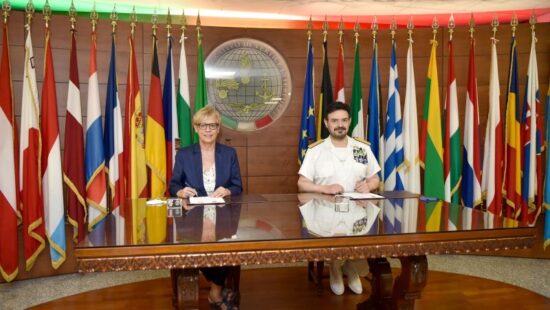

Italy is becoming Europe’s door to Africa yet again, as it rediscovers its centrality in the (wider) Mediterranean area and relaunches the EU’s actions in Libya. The Berlin-Brussels-Rome triangulation of the past days seems to suggest as much, what with the Italian minister of defence Lorenzo Guerini in Germany, the High Representative Josep Borrell meeting him and foreign minister Luigi Di Maio in Rome.

The stabilisation of Libya remains Italy’s “strategic priority,” as Mr Guerini constantly repeats. All eyes are on the newly formed government of Abdulhamid Dabaiba, tasked with ferrying the country to the December 24 elections.

The aim is to preserve this process and avoid dangerous destabilisations (including those coming from outside), by means of increasing the European weight compared to other forces (i.e. Russia and Turkey) which have become main actors in the dossier.

“Our Defence can be an important lever for the return of Italian centrality in Libya,” said Mr Guerini in an interview with the Italian daily Repubblica. His words are reminiscent of the December accord he signed with his former homologue in the Government of National Accord (GNA), al Namroush, which focussed on technical and military collaboration as well as support for the humanitarian mine clearance operations.

Now all of the Eu must converge on this line, starting with the most effective instrument that Brussels managed to field for Libya: the EUNavFor-Med Irini mission, headed by Admiral Fabio Agostini, who yesterday welcomed Mr Borrell in Rome.

According to Mr Guerini, the mission can benefit from the additional deployment of assets and pooling them to cover both the arms embargo and the training of Libyan security forces – which entails an increased focus on capacity building. It would also be “appropriate to elicit more collaboration with the NATO Sea Guardian mission,” he added yesterday.

Irini is due for a two-year renewal next week. Italy is working to ensure it is also strengthened, especially in light of the UN report – published right before Mr Borrell’s visit to Rome – detailing how the arms influx rendered the arms embargo “ineffective.”

The High Representative today admitted to the daily Il Foglio that the EU is waiting for the UN’s mandate to add “aerial surveillance over the ceasefire” to its embargo-related duties. This would be a “mandate” test for the new government, too, and another notch on the belt of European military involvement.

As for Italy, the most recent resolution concerning the Irini mission authorised the deployment of up to 500 military personnel, one naval and three aerial units. Those numbers might increase, even considering the added strain of the bilateral mission Miasit.

According to General Marco Bertolini, “Italy must involve Europe on Libya and have it converging on its interests […] Over the past years, our country suffered from European distractions on this dossier. It was left alone. It lost an extremely important business partner in Gaddafi, and then it saw the weight of immigration dumped on its shoulders.”

Moreover, Italy could suffer from the jihadist extremism which Libya harbours. Hence the need for renovating the EU’s action, “exactly like the French did with the Sahel, making their own objective European ones. Clearly,” he added,” the French interests coincide with the Italian ones in that region, because it influences Libya, with direct effects on Europe.”

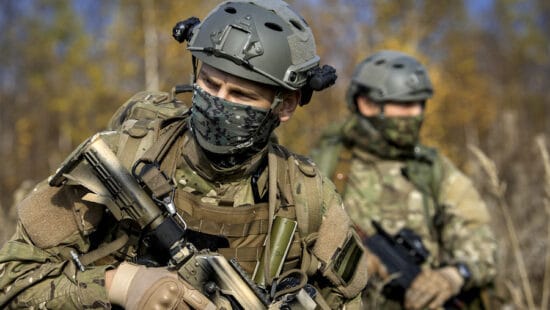
The attention is indeed growing around the Sahel, a region that’s as wide as Europe and ravaged by jihadists forces, against which France has long been requesting support. Italy is currently contributing with 200 personnel and 20 land vehicles to the Takuba task force and a logistical collaboration base under construction in Niger, but Mr Guerini is ready to “deploy a helicopter squadron for medium evacuations,” to gain a European “perspective” in that area, too.

The Sahel also cropped up in Berlin during the talks between the Italian defence minister and his German counterpart, Annegret Kramp-Karrembauer, who offered to integrate the German Gazzelle mission in the European Union Training Mission (EUTM) in Mali.

After his meeting with Mr Borrell, Mr Guerini called the German initiative an “effective and absolutely agreeable approach” which “properly interprets the EU’s necessity (and that of its member states) to act systematically and efficiently, in synergy with all the other initiatives of the Sahel Coalition”.


Translated by Otto Lanzavecchia

Italy is bringing Europe back to Africa. Here's the strategy

Josep Borrell’s visit confirmed the Italian attempt to relaunch the EU’s action in Lybia and Africa. Here’s how the Italian Defence moves in Europe, from the proposed aerial surveillance over the Libyan ceasefire area to the arrival of our helicopters in Mali. According to General Bertolini, “we’re learning from the French to safeguard our interests”

تقرير: إيطاليا تعيد إطلاق عمل الاتحاد الأوروبي في ليبيا و إفريقيا

اعتبرت مجلة "فورميكي" الإيطالية أن زيارة الممثل الأعلى للسياسة الخارجية والشؤون الأمنية في الاتحاد الأوروبي، جوزيب بوريل، لروما تؤكد محاولة إيطاليا إعادة إطلاق عمل الاتحاد الأوروبي في ليبيا وفي جميع أنحاء إفريقيا، وذلك عبر فرضية المراقبة الجوية لوقف إطلاق النار ووصول المروحيات الإيطالية إلى مالي. وقالت المجلة إن رسالة برلين و بروكسل و روما مؤخراً تمثلت في إعادة إيطاليا، أوروبا…

Pechino sfrutta così il summit Usa-Cina

Usa e Cina ringhiano a distanza ravvicinata. Nel primo faccia a faccia ad Anchorage, Pechino usa le telecamere per lanciare un’invettiva anti-americana. Washington risponde

Vaccini, chip, spazio e idrogeno. Ecco la strategia di Giorgetti e Le Maire

Vaccini, idrogeno, spazio e semiconduttori. Sono i quattro pilastri dell’autonomia strategica europea a trazione italo-francese. Dal Mise Giancarlo Giorgetti e il ministro dell’Economia francese Bruno Le Maire svelano la road map. Un altro tassello che rinforza l’asse fra Roma e Parigi

Manifatturiero, niente licenziamenti. Parola di Bonomi

“Per l’industria manifatturiera” che può utilizzare la cassa integrazione ordinaria “non ci saranno licenziamenti”. Così il presidente di Confindustria, Carlo Bonomi, chiarisce la situazione rispetto al blocco dei licenziamenti che

Mps corteggiata da una cordata americana. Ma il governo...

Due mesi fa al Tesoro, azionista del Monte, è arrivata la proposta di un pool di investitori a stelle e strisce, per entrare nella banca che il governo vorrebbe spingere tra le braccia di Unicredit. Ma la scarsa esperienza bancaria degli americani avrebbe scoraggiato il governo. Ma a Siena serve uno sposo…

Cyber, il campus di Parigi e l’agenda di Gabrielli

Un campus per la cybersecurity di 25.000 metri quadri nel cuore di Parigi che in 4 anni creerà 75.000 posti di lavoro. Il governo francese ha individuato l’istituto da agganciare alla rete europea del “Cybersecurity competence center”. Ricerca, imprese e 007 insieme. Ora tocca all’Italia, che ha affossato fra le polemiche l’Istituto cyber proposto dal Conte-bis

Birmania, perché l’uscita dal tunnel è lontana. Scrive Scotti

“Anche io mi inginocchio sulle strade della Birmania e dico ‘cessi la violenza’”, ha detto Bergoglio riguardo la situazione drammatica del Paese. Tra contatti Usa-Cina delle ultime ore, Consiglio dei ministri degli Esteri dell’Ue atteso per lunedì, pubblichiamo una lettera di Vincenzo Scotti, presidente dell’Associazione Italia-Birmania insieme, sugli interventi possibili per far intravedere una soluzione

Vi racconto cosa agita la Tunisia. Parla Abdessalem (Nahda)

Di Giacomo Fiaschi

La transizione democratica tunisina, i rapporti con l’Italia e la partita tutta da giocare della Libia. Intervista a Rafik Abdessalem, membro dell’ufficio esecutivo del partito Nahda e fondatore e presidente del Center for Strategic and Diplomatic Studies

Nuove guerre navali in arrivo? Ecco il piano della Marina del Regno Unito

A causa dell’epidemia di coronavirus, il rapporto sulla revisione della politica di difesa e sicurezza del Regno Unito del 2020 è stato rinviato al 2021. La sua pubblicazione è un evento fondamentale: delinea una tabella di marcia per lo sviluppo delle forze armate britanniche e delle altre componenti della difesa e della sicurezza

×

Iscriviti alla newsletter